

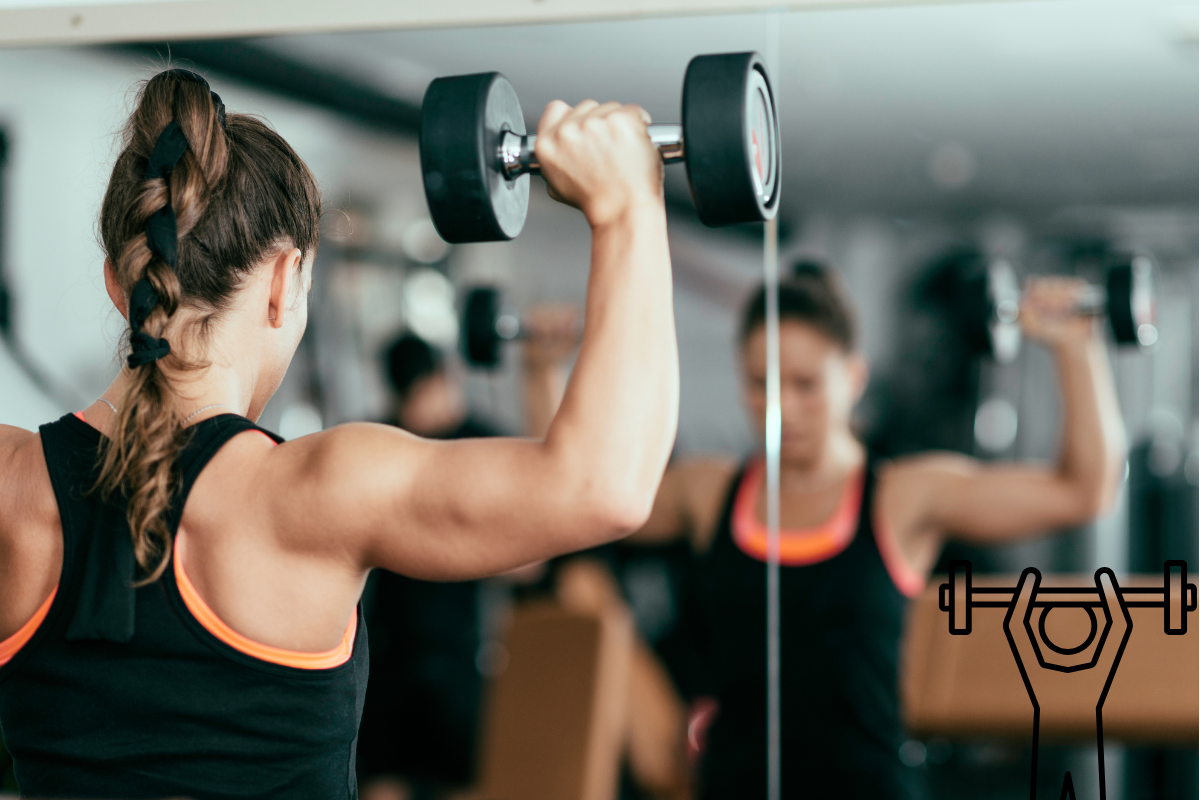
Most gymgoers think about the chest and arms for gain, but they forget that shoulders are the centrepieces of both beauty and performance. A proper workout for the shoulders in the gym not only gives that powerful, wide-shouldered frame, but it also enhances the strength for pressing movement, improves posture, and wards off shoulder injuries.
In this post, we will cover:
- Shoulder Anatomy & Why It Matters
- Warm-Up & Prehab For Injury Avoidance
- Best Exercises in the Gym for the Deltoids From Front to Side to Rear
- Sample Classes for Gym Shoulder Workouts
- Programming and Frequency Tips
- Common Mistakes and Universal Fixes
So let’s get started.
1. Shoulder Anatomy and Why It Matters
Being armed with some knowledge about shoulder muscles should make you train smarter. The characters that really matter include:
- The deltoid muscle (Delts) is usually classified into “three heads”
- Anterior (front) deltoid
- Lateral / medial (middle) deltoid
- Posterior (rear) deltoid
- Rotator cuff muscles – rather smaller but essential for stability and injury prevention.
In brief, training the shoulders is to strengthen the whole range of deltoid heads and smaller stabilisers. When either the delts or rotator cuff is neglected during training, muscle imbalances, rounded shoulders, and a greater potential for injury become likely.
2. Warm-Up & Prehab Before Injury Prevention
The shoulder is quite a mobile and complex joint, so one can cause irreparable damage even in the absence of a warm-up. Activation and mobility work serve to assure a safe shoulder workout in the gym.
Warm-Up and Activation Suggestions:
- Light banded external rotations (2-3 sets 15-20 reps) is to get you ready for use of rotator cuff muscles
- Overhead band presses (pressing against a resistance band) for shoulder activation
- Dynamic arm circles, shoulder dislocations with a band, scapular retractions
Safety Guidelines:
- Minimise stress on front delts; they have already been taken care of by your chest training.
- Don’t indulge in risky stuff like behind-the-neck presses or extremely narrow upright rows; these put a lot of stress on the shoulder capsule.
- Move through the entire range of motion with control and strict form (no cheating by using momentum).
3. The Best Gym Exercises to Target Delts
Here is a compiled outline of the top exercises to have in your shoulder workout in the gym, categorised by which “head” of the deltoid they focus on.
A. Compound Pressing Movements (Fundamental)
They should be built into the foundation for the shoulder workout in the gym so they can allow one to lift heavier weights and engage multiple heads.
- Overhead Press/Military Press (Barbell or Dumbbell): The traditional movement for pressing. Mostly front delts working with a bit of involvement from the middle and rear.
- Arnold Press: You must hold the dumbbells with palms facing you and then rotate into palms facing forward with the press; it incorporates all three heads much more evenly into the movement.
B. Lateral / Medial Delt Isolation
Really targeted lateral delt work, if, in a word, you want width.
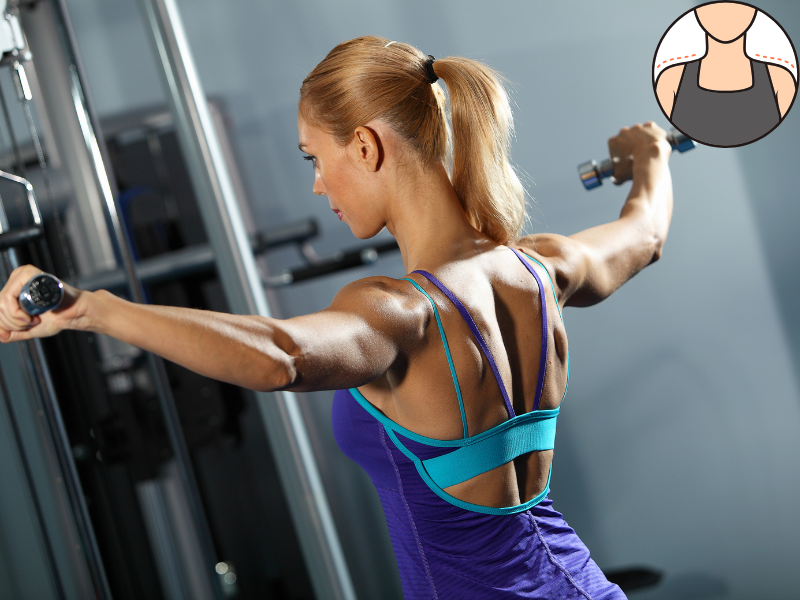
- Dumbbell Lateral Raise: Simple yet effective when done under control and with moderate weight. No swinging.
- Cable Lateral Raise (or Machine): Maximum tension at the top of the movement.
C. Front Delt Isolation
Somewhat in presses, front delts activate, but isolation work really refines shape.
- Front Raises (Dumbbell or Cable): Straighten your arms up in front of you—that’s it—don’t cheat by swinging them up.
D. Rear Delt / Posterior Chain Focus
Probably the least-hit rear delts are key muscles for balance and posture.
- Face Pulls: One of the very best overall posterior shoulder & rotator cuff movements.
- Rear Delt Fly / Reverse Fly (Dumbbell or Cable): Bent over or face-down lying on an incline bench.
- Bent-Over DB Rear Delt Row / Reverse Pec Deck: Useful when you want to load the area really heavily.
E. Supplemental/Stability Options
- Band Pull-Aparts / External Rotation with Band: Great for prehab or warm-up or finishing sets.
- Landmine Presses / Single Arm Overhead Press Variants: Uh, when mobility allows.
4. Sample gym shoulder workout routine
Below are a couple of sample routines you could fit into your gym days. Adjust weights, sets, and rest according to your fitness level.
Routine A: Balanced Shoulder Day
| Exercise | Sets × Reps | Notes |
| Band external rotations (warm-up) | 2 × 15-20 | Light band |
| Overhead dumbbell press | 4 × 6-10 | Challenging Yet Safe |
| Dumbbell lateral raise | 3 × 10⁻¹⁵ | Strict Form |
| Front Raise (Dumbbell or Cable) | 2 × 12-15 | Moderate Weight |
| Face pulls | 3 × 12-20 | Purposeful Behind-Delts Squeeze |
| Rear delt fly/reverse fly | 2 × 10⁻¹⁵ | Control the Eccentric |
Routine B: Hit Delts Twice a Week: Split-Up Approach
D1 (Heavy / Compound-Focused):
- Overhead press (barbell or dumbbell) — 4 × 6-8
- Arnold press — 3 × 8-10
- Lateral raises superset with front raises — 3 × 10 + 10
D2 (Isolation / Rear Emphasis):
Face pulls — 4 × 15
- Rear delt fly/reverse fly — 3 × 12
- Single-arm cable lateral raise — 3 × 12 each side
- Band external rotation — 2 × 20
Tips:
- Progressive overload — so you should try to make the weight, sets or reps gradually bigger through time from now on.
- Randomly change the exercise order sometimes to break down plateaus.
- Include drop sets or supersets whenever you need some extra intensity.
5. Programming: Frequency, Volume & Recovery
For an average lifter, 1–2 shoulder-specific workouts on a weekly basis will suffice.
The entire volume should range between 8 and 20 reps per set, with 30 to 90 seconds of rest in between sets, depending on the load and training goal.
Shoulders are made to work in pressing and pulling movements in the actual workout, so don’t excessively tax them through posterior exercise (bench, rows, press-ups).
Rotations are the key; do not perform the exact same shoulder workout each week. Alternate your variations or just alter the order of the exercises.
Common mistakes & fixes
| Mistake | Issue | Fix/Alternative |
| Using too much weight | reducing deltoid activation, thus higher risk of injury | Use moderate loads where strict form can be maintained |
| Neglecting rear delts and rotator cuffs | training Will lead to imbalance, poor posture, and pain relayed from shoulders | Include face pulls, rear delt flys, and external rotations in your programmes. |
| Skipping warm-ups and activations | As this could lead to serious shoulder joint injuries | It is recommended to always start with some light band work and mobility drills. |
| Behind-the-neck presses/narrow-grip upright rows | Potentially induce shoulder joint impingement | Alternatives such as front raises or neutral grip presses should be used. |
| Staying with the routine for months | Regression due to lack of progress, injury from overuse | Mix your exercise order constantly along with rep ranges and training styles |
Final Thoughts & Key Takeaways
A good shoulder workout at the gym should cater to all three heads of deltoids, plus a little attention to the stabilisers.
Always mobilise and activate your rotator cuff before you go heavy.
Make your compound pressing exercises clinch; isolation work follows on top of that.
Go strict, controlled, full motion – don’t swing.
Plan with science: don’t overtrain shoulders, but allow for recovery.











Leave a Reply